Before The Witcher Became a Giant, BioWare Helped It Get Started
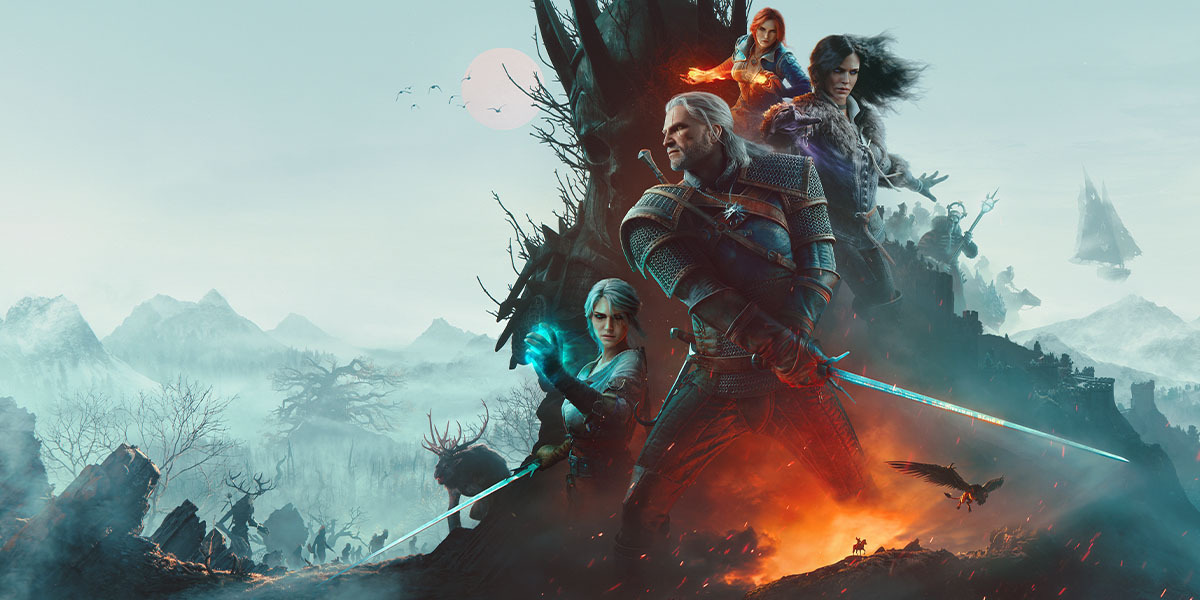
When CD Projekt marked the original Witcher game’s 19th anniversary on October 26, its message was not primarily about Geralt. It was about BioWare.
CD Projekt's anniversary tribute to the first Witcher game credits BioWare with more than a game engine. The Canadian studio supplied technology and technical knowledge, and it helped the young Polish developer get an international showcase. The exchange illustrates how creative studios sometimes build each other's futures long before either becomes a global name.
The timing gives an otherwise familiar piece of game history unusual weight. The company that helped a young studio find its feet is disappearing, while one of the franchises it helped launch remains central to modern fantasy gaming.
More than an engine license
The original The Witcher arrived on PC in October 2007, adapting the world of Polish author Andrzej Sapkowski. It was built using a heavily modified version of BioWare’s Aurora engine, technology associated with Neverwinter Nights.
In its October 26 anniversary message, CD Projekt credited BioWare not only for Aurora but also for sharing development knowledge and making room for The Witcher at its E3 booth. That last detail matters. For an unfamiliar developer trying to introduce a Polish fantasy property internationally, being seen beside an established RPG studio was a meaningful opportunity.
CD Projekt's tribute describes concrete support from BioWare, including technology and early international visibility. The Polish studio still had to build the game, adapt Sapkowski's fiction and develop a distinctive creative identity beyond its technical foundation.
The connection started before Geralt
The two companies’ histories intersected earlier through Baldur’s Gate. CD Projekt helped bring BioWare’s 1998 RPG to Polish players with a substantial local-language release. Co-founder Marcin Iwiński later described the financial risk of that early publishing deal in a retrospective interview; it became an important success for a company then known for distributing and localizing games rather than developing them.
There is a pleasing symmetry here, but it is more than trivia. The business that helped introduce a Canadian fantasy RPG to Polish players later relied on that studio’s technology and goodwill to make its own fantasy RPG. In both directions, localization, distribution and access mattered alongside creative ambition.
CD Projekt eventually moved beyond Aurora, developing its own REDengine for The Witcher 2 and later games. That technical independence does not erase the original debt. The first step in a studio’s history can be crucial even when everything that follows looks radically different.
Why the tribute feels different in 2026
BioWare confirmed on October 21 that it was closing and that early development on its next Mass Effect project was ending. Reuters separately reported wider Electronic Arts job cuts and a shift toward a narrower slate of projects. Those are established developments; they should not be confused with speculation about the future ownership or revival of individual BioWare franchises.
CD Projekt’s anniversary post did not say that BioWare’s closure prompted it. Reading the tribute as a response is an interpretation of its timing, not a stated motive. But the juxtaposition is difficult to miss: an influential RPG maker has reached the end of its run just as another celebrates the work it enabled.
BioWare’s legacy is often summarized as dialogue wheels, companion romances and morally difficult decisions. The Witcher connection points to a less visible legacy: tools shared, risks taken on newcomers, and an industry in which one studio’s success could help create the conditions for another’s.
The Aurora engine gave The Witcher a foundation, but distribution and visibility were equally practical barriers. CD Projekt's earlier experience bringing Baldur's Gate to Polish players makes this relationship unusually reciprocal: knowledge and opportunity travelled in both directions.
REDengine and later Witcher games took CD Projekt far from Aurora. The technical debt disappeared, but the history did not. That is a more substantial legacy than another familiar tribute to BioWare's companion stories.
Sources
CD Projekt's October 26 message thanking BioWare for its technology and early support is documented in PC Gamer's report on the official tribute.
Reuters: Electronic Arts and BioWare restructuring (October 21, 2026).


Join the conversation
Share your thoughts on this story. Please keep the discussion thoughtful and respectful.